
Tea as a Path
20/05/26, 12:00
Reflections by Victoria Shetliez-Virich on International Tea Day
Ukraine House Japan is launching a series of publications dedicated to the women members of our organization, their professional journeys, experiences, and personal reflections. Over the coming months, we will introduce readers to the people who shape the UHJ community and actively contribute to the development of Ukrainian-Japanese cultural dialogue.
The first featured member in this series is Victoria Shetliez-Virich Victoria Shetliez-Virich, who, on the occasion of International Tea Day, shares her reflections on tea as a cultural phenomenon, a philosophy, and a personal path through life.
On the occasion of International Tea Day, celebrated around the world on May 21, Ukraine House Japan member Victoria Shetliez-Virich shares her personal reflections on tea as a cultural phenomenon, a philosophy, and a lifelong journey.
“International Tea Day has always been an opportunity for me to reflect on something that goes far beyond ordinary gastronomy. This occasion highlights the role of a drink that, for centuries, has shaped trade routes, diplomatic etiquette, and entire layers of culture. The very concept of tea culture creates a special space where mutual respect and tolerance become a natural consequence of the process itself. It seems to me that people involved in the world of tea often radiate a particular calmness and politeness, because tea does not tolerate haste.
My own journey with tea began as a childhood habit and gradually led me toward a deep professional study of geography and traditions. I remember the misty highland plantations of Darjeeling, where the mountains seemed covered in white blankets, and the state of Assam, where time is measured not by time zones, but by the movement of the sun. It was there that I learned about the unique Tea Garden Time — a rhythm of life set one hour ahead of official time to support the tea harvest. Years of working with refined Taiwanese and Japanese teas taught my palate not only to distinguish the nuances of first harvests, but also to collect aromas in memory, choosing them according to a particular emotional state or inner need.
At the heart of my tea philosophy lie the four fundamental principles of Chadō: Wa, Kei, Sei, and Jaku.
Harmony (Wa): For me, this means the absence of contradiction between a person and the surrounding space. It is a state in which breathing becomes steady and the heartbeat synchronizes with the vibrations of the moment.
Respect (Kei): This is the ability to sense the presence of another person even before they appear. It is honesty and the capacity to recognize the best qualities in people, even before they themselves reveal them.
Purity (Sei): This relates to inner sincerity. It is the foundation upon which my principles and experience are built, allowing me to remain myself under any circumstances.
Tranquility (Jaku): This is neither passivity nor the absence of action, but a deep inner rootedness. It is a state of silence that does not depend on external circumstances, but instead serves as a reliable inner center. It is precisely this tranquility that becomes the foundation supporting my life principles, professional experience, and ability to preserve integrity under any conditions.
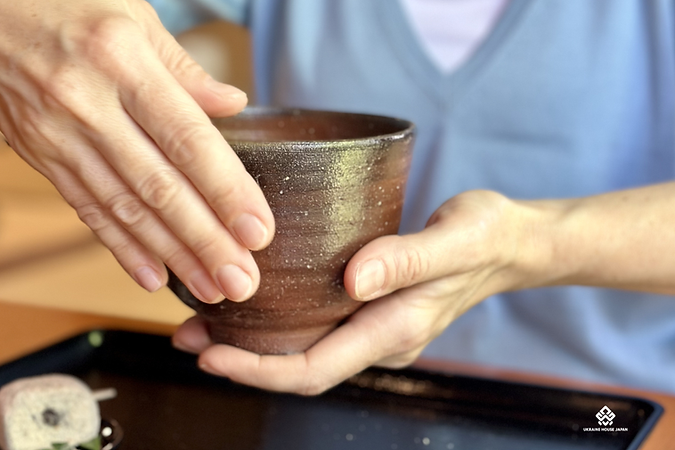
The tea ceremony teaches me to feel space in its continuous movement — from the barely audible sound of water to the moment when silence is born. In this almost imperceptible pause between sound and stillness lies a true infinity, where space and time merge into one whole. It is a special rhythm that helps synchronize one’s inner state with the breathing of the world. When tea becomes the foundation of one’s worldview, it transforms into a quiet force that brings harmony into every moment.”
More about Victoria Shetliez-Virich Viktoriya Shetliez-Virich and her work can also be discovered in this interview: youtube.com/watch?reload=9&v=dfJ7tvG8NIA

