
Warriors: the Cossack and the Samurai
17/01/26, 12:00
This is a series of essays about symbols through which the spirit of Ukraine can be most clearly understood.
One such symbol of courage is the warrior.
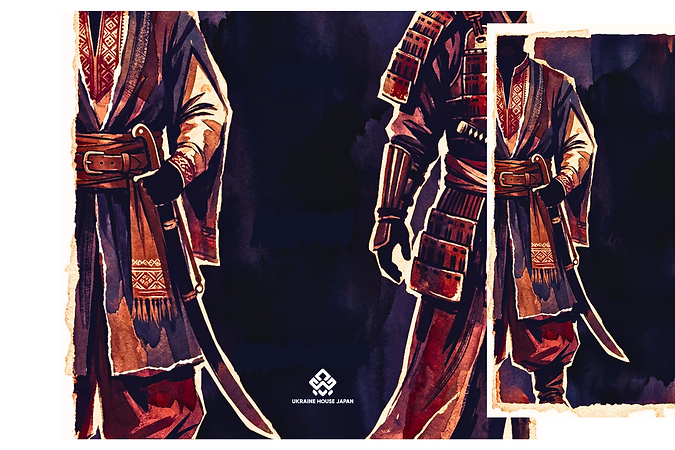
In Ukrainian tradition, the Cossack is both a defender and a free person. His image took shape in the sixteenth century at the Zaporizhian Sich. Cossacks were unsurpassed horsemen. Their saber, spear, and bow became emblems of mastery. They were renowned for their skill in fencing, reconnaissance, and moving through the steppe unseen by the enemy. European rulers valued Cossacks as allies and hired them into cavalry units. Acting swiftly and unexpectedly, they became a formidable force. Cossack bravery was inseparable from military cunning. Brotherhood lay at the heart of their way of life: every warrior knew that his back was protected by a comrade.
In Japanese culture, a similar symbol is the samurai. He lived according to the code of bushidō—loyalty, discipline, and readiness to give one’s life for one’s lord. His weapon, the katana, is regarded as an extension of the soul. A samurai refined his skill over many years, uniting martial training with spiritual practice.
The Cossack and the samurai belong to different worlds, yet their values resonate with one another. For Ukrainians, the Cossack embodies freedom and honor. For Japanese people, the samurai represents harmony between service and strength.
Today, Ukrainian soldiers on the front lines recall the Cossacks—devoted to their land, inventive in battle, and steadfast in spirit. For the Japanese, the image of the samurai likewise remains a source of inspiration. These are symbols that teach us that the warrior’s path is a path of dignity, enduring across the centuries.